Policy on uniform and equipment.
The information in these pages is intended merely as a guide for unit members on obtaining the correct period uniform and
equipment impression and the contents herein are not to be construed as the absolute definitive on the subject. We operate a strict policy on authenticity and appearance in the interest of historic accuracy and any deviation from the policy will not be permitted. Please consult the unit CO, Authenticity Officer or Quartermaster for guidance on matters of uniform, equipment and appearance.
THE BASIC RULE IS: IF THE RED ARMY DID NOT WEAR IT OR CARRY IT, THEN NEITHER DO WE!
equipment impression and the contents herein are not to be construed as the absolute definitive on the subject. We operate a strict policy on authenticity and appearance in the interest of historic accuracy and any deviation from the policy will not be permitted. Please consult the unit CO, Authenticity Officer or Quartermaster for guidance on matters of uniform, equipment and appearance.
THE BASIC RULE IS: IF THE RED ARMY DID NOT WEAR IT OR CARRY IT, THEN NEITHER DO WE!
Overview of uniforms of the period.
During the course of the 1930's and into the early war years there were a number of uniform changes which are evident and therefore reflect in various aspects of our Red Army impression of that period. When attending public events members will receive advice as to which period we will be portraying, ie early or late war. Generally at most events, the unit tends to portray from the early 1943 period onwards to the end of the war.
Terminology such as Obr.1935 or 41 relates to pre and early war and Obr. 43 relates to mid to late war impressions.
(Note Obr. is an abbreviation of the Russian term Obrastsa, meaning Model ie uniform Model of 1935, 41 or 43, the year they were introduced etc.)
As we portray a Rifle (Infantry) unit in the field, the emphasis contained in this guidance is therefore aimed at the Red Army soldier and how he or she would have appeared in the field or on the front line.
Terminology such as Obr.1935 or 41 relates to pre and early war and Obr. 43 relates to mid to late war impressions.
(Note Obr. is an abbreviation of the Russian term Obrastsa, meaning Model ie uniform Model of 1935, 41 or 43, the year they were introduced etc.)
As we portray a Rifle (Infantry) unit in the field, the emphasis contained in this guidance is therefore aimed at the Red Army soldier and how he or she would have appeared in the field or on the front line.
Helmets and headwear.
Kaska 1936.
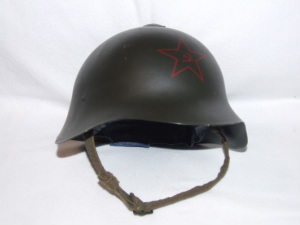
Introduced in 1936 to replace the Kaska 1928 helmet, which was based on the French M1915 "Adrian" helmet. The Kaska 36 is distinguished by its small crest, which covered the helmet ventilation on the crown and with the distinctive flared rims at the sides over the ears. It was replaced by the Obr 39 and 40 steel helmets, but was seen in the field until 1943. Initially it was issued with a leather chin strap and leatherette liner, which soon perished under prolonged field conditions and was later replaced by a canvas type chinstrap and a cloth/canvas "sock" type liner with a leatherette sweat band. It was painted in a shade of olive green and often seen pre and early war with a stencilled red star on the front.
Kaska 1936.
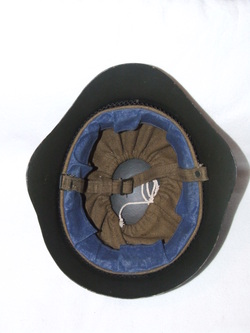
Interior of the Kaska 1936 showing detail of the "sock" type liner.
Stal'noi schlem Obr 1939 Ssh steel helmet.
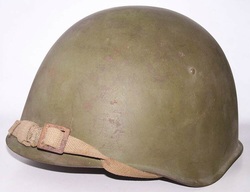
Introduced to replace the Kaska 1936 helmet.
This pattern helmet was the classic Soviet helmet of the war and its basic shape continued in use until the late 1950's early 1960's. It is distinguished by the three rivets on the upper outer side of the helmet, which secure the liner to the shell. Early patterns had a leather chinstrap and liner similar to the German M1935 liner. Later patterns had a cloth/canvas "sock " type liner with a leatherette sweat band and canvas or web chinstrap. It was still produced in 1940 and 1941, in parallel with the Obr 1940 Ssh helmet. It was painted in a shade of olive green.
Obr 1939 Ssh.
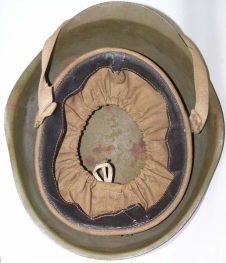
Interior of the Obr 1939 steel helmet showing detail of the "sock" type liner.
The disadvantage of this type of liner was that in winter conditions it could only be worn with a wool knit "Podschlemnik" balaclava hat. The ensuing Obr 1940 Ssh helmet liner readdressed this issue.
Stal'noi schlem Obr 1940 Ssh steel helmet.
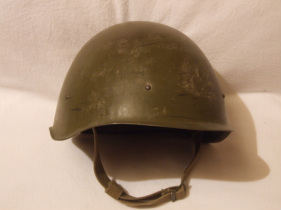
Introduced in 1940 and largely replaced the Obr 1939 helmet after 1941.Basically the same helmet shell as the Obr 39, it is distinguished by six rivets on the lower outer side of the helmet, which secure the liner to the shell. The liner consists of three leatherette pouches which contained wadding pads and a draw string. It was painted in a shade of olive green, known as Protective Green 4BO.
Obr 1940 Ssh.
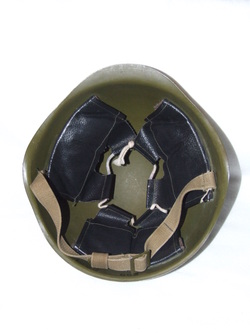
Interior of the Obr 1940 helmet showing detail of the "three pad" liner.
The wadding could be partially removed or removed entirely to adjust for fitting, so the helmet could be worn over either a pilotka side cap,a wool knit "Podschlemnik" balaclava hat or the warmer ushanka fur hat during winter conditions.
 Soviet wartime period WW2 4BO paint colour scheme.
Note: The wartime paint colour scheme was known as Защитный зеленый 4BО
(Protective Green 4VO), which persisted as the basic colour well into the post war period. RKKA paint mixing instructions from 1941 specify that Protective Green 4BO was a mixture of 40-60% yellow ochre, 15-20% zinc chromate, 10% ultramarine and 10-20% white. Following these instructions resulted in a range of fairly light greens with a distinct yellow tint in a flat matt finish. This basic colour was applied to everything variously from vehicles, to metalwork, weapons and woodwork.
Modern paint equivalents result in a range of fairly light greens with a distinct yellow tint matt finish. Using the international RAL colour pallet scheme, the nearest RAL reference to the above scheme is no.1027 Curry Paint, image shown right.
(Protective Green 4VO), which persisted as the basic colour well into the post war period. RKKA paint mixing instructions from 1941 specify that Protective Green 4BO was a mixture of 40-60% yellow ochre, 15-20% zinc chromate, 10% ultramarine and 10-20% white. Following these instructions resulted in a range of fairly light greens with a distinct yellow tint in a flat matt finish. This basic colour was applied to everything variously from vehicles, to metalwork, weapons and woodwork.
Modern paint equivalents result in a range of fairly light greens with a distinct yellow tint matt finish. Using the international RAL colour pallet scheme, the nearest RAL reference to the above scheme is no.1027 Curry Paint, image shown right.
Schlem or "Broadcloth" helmet.
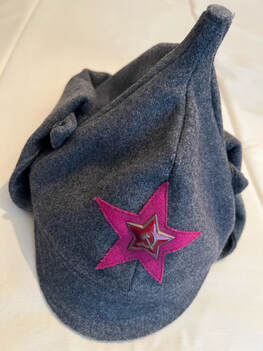
Winter wool blend schlem with cap star cloth backing in infantry/rifle branch colour of magenta/raspberry red..
|
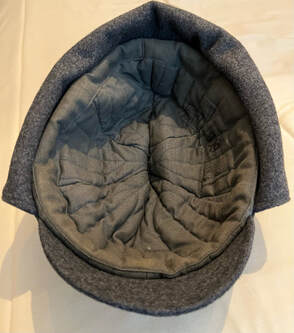
Winter wool blend schlem showing the rudimentary padding of the interior.
|
Officially introduced on 16th January 1919 as the head dress of the Red Army and was initially referred to as "Bogatyrka", subsequently referred to as "Budenovka", named after Semyon Budyonny, founder of the Red Army cavalry during the Civil War (7 Nov 1917 – 25 Oct 1922) and a close political ally of Stalin. It's design was supposed to have been modelled on the conical shape of the helmets of the Bogatyri, the heroic elite warriors portrayed in early medieval East Slavic legends and folklore.
They also came in cotton and wool materials for the varying seasons. It had folding flaps which could be lowered to cover the back of the head, ears and neck by the wearer for rudimentary protection in poor weather conditions.
In January 1922 a summer or temperate climate schlem was also issued made of white or khaki cotton material. It had a visor both at the front and back which covered the nape of the neck. It was jokingly referred to by the troops as the " hello goodbye" cap!
In 1927 the hat was remodelled and the conical top was reduced in height. It was produced in varying colours during its time in use, grey and khaki, dark blue (Air Force), black (Armoured & Technical) and it had a cloth star on the front in the respective branch of service colour, to which a red enamelled metal star bearing the hammer and sickle emblem was centrally afixed. Following uniform reforms when the "Pilotka" side cap was introduced, the schlem began to be phased out in 1935, but was still in service during the Winter War 1939-40 and the beginning of the GPW. Thereafter they were occasionally seen in the field as late as March 1943 and were used by militia,military cadet schools and also partisan units. In 1940 the ushanka pile hat was introduced to replace the winter wool schlem.
They also came in cotton and wool materials for the varying seasons. It had folding flaps which could be lowered to cover the back of the head, ears and neck by the wearer for rudimentary protection in poor weather conditions.
In January 1922 a summer or temperate climate schlem was also issued made of white or khaki cotton material. It had a visor both at the front and back which covered the nape of the neck. It was jokingly referred to by the troops as the " hello goodbye" cap!
In 1927 the hat was remodelled and the conical top was reduced in height. It was produced in varying colours during its time in use, grey and khaki, dark blue (Air Force), black (Armoured & Technical) and it had a cloth star on the front in the respective branch of service colour, to which a red enamelled metal star bearing the hammer and sickle emblem was centrally afixed. Following uniform reforms when the "Pilotka" side cap was introduced, the schlem began to be phased out in 1935, but was still in service during the Winter War 1939-40 and the beginning of the GPW. Thereafter they were occasionally seen in the field as late as March 1943 and were used by militia,military cadet schools and also partisan units. In 1940 the ushanka pile hat was introduced to replace the winter wool schlem.
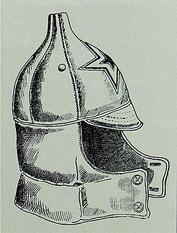
Image from period manual showing how the budenovka appeared when worn with the cloth flaps folded down for cold inclement weather conditions.
|
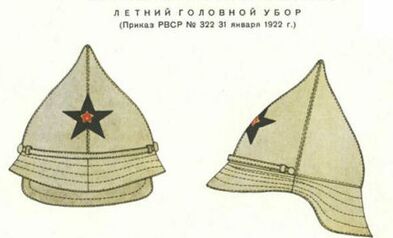
Summer Helmet. Order of the Revolutionary Council of the Soviet Republic No. 322, 31st January 1922. Image is from the period manual on Red Army uniform regulations.
|
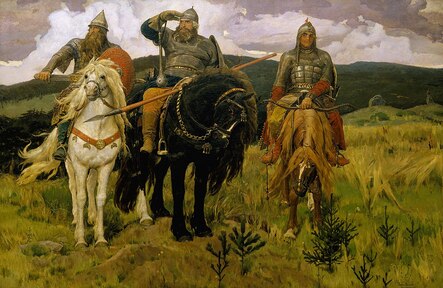
A well known late 19th century painting of the “Bogatyri”, depicting three of the most famous Russian bogatyrs, a noble class of warriors who were legendary heroes in medieval East Slavic tales.The Budenovka's design reflects the conical shape of the helmets of the Bogatyr, designed to instill elements of Russia's past!
Pilotka or side cap.
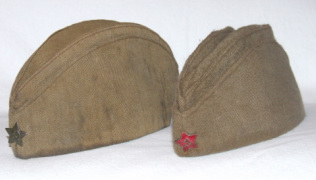
Introduced from 1935 onwards to replace the earlier pattern Schlem or "Budenovka" broadcloth helmet. The pilotka came in cotton weight material for summer use and wool for winter. Officers patterns were of better quality and were piped in branch of service colours. They were seen worn with enamelled red or subdued painted green cap stars as well as no cap badges in the field. It was common practice for soldiers to keep needles, thread and a spare tunic collar liner within the folds of the pilotka.
Internally, they were lined in cotton material, predominantly in khaki colours and were produced with a faux leatherette sweatband(either dark grey/black/dark brown) or without any sweatband at all.
Left: Cotton drill summer issue with subdued painted green metal capstar. Right: Wool blend winter issue with red enamelled capstar
Internally, they were lined in cotton material, predominantly in khaki colours and were produced with a faux leatherette sweatband(either dark grey/black/dark brown) or without any sweatband at all.
Left: Cotton drill summer issue with subdued painted green metal capstar. Right: Wool blend winter issue with red enamelled capstar
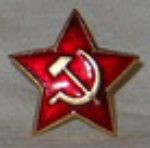
Pilotka cap stars.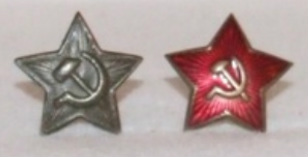
Left: Detail of wartime pattern cap stars worn on the pilotka.The caps star commonly worn was
25 mm in size. Right: Post war white metal cap star. These are not suitable for wartime representation and must not be worn. |
|
Furazhka or Forage caps.
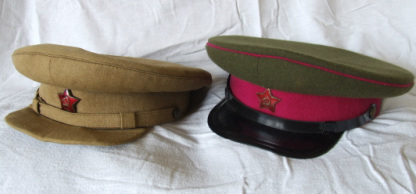
Left: Field service cap. Right: Rifle unit cap.
Forage caps were issued to all ranks. During the war the forage cap was primarily seen worn by officers and senior NCO's in all branches of the Red Army.
Pre and early war caps had the piping and cap bands in branch of service colour, ie such as magenta coloured for Rifle forces, red piping and black cap band for Artillery and Armoured forces, blue for Cavalry, sky blue for Air Force etc. The 32mm red enamelled cap star was worn on the cap.The cap had a squared "duckbill" black patent visor. A field version was also issued in all khaki material with either a green patent or plain khaki cloth covered visor was worn with a 32mm cap star, either red enamelled/painted or subdued green in colour. The respective chin straps were attached by 14mm buttons.
Pre and early war caps had the piping and cap bands in branch of service colour, ie such as magenta coloured for Rifle forces, red piping and black cap band for Artillery and Armoured forces, blue for Cavalry, sky blue for Air Force etc. The 32mm red enamelled cap star was worn on the cap.The cap had a squared "duckbill" black patent visor. A field version was also issued in all khaki material with either a green patent or plain khaki cloth covered visor was worn with a 32mm cap star, either red enamelled/painted or subdued green in colour. The respective chin straps were attached by 14mm buttons.
M-38 Field Hat 'Panamka'
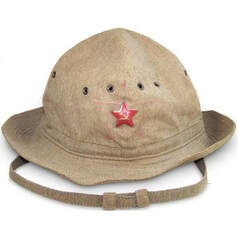
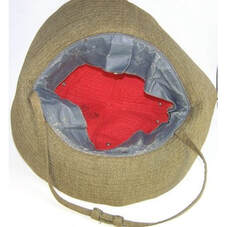
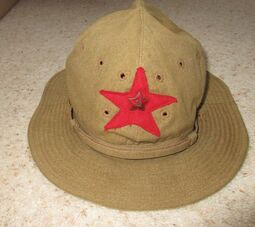
Order No. 61 of March 10, 1938, of NKO, USSR authorised for wear the sub tropical hat for troops and institutions of the Central Asian, North Caucasus and Transcaucasia Military Districts and for units located in Crimea. It was officially known as the M-38 Field Hat, but commonly referred to by troops as the 'Panamka',because of its similar appearance in shape to the 'Panama Hat' and was a development of the cotton subtropical helmet introduced for use by NKVD troops on December 27, 1935.
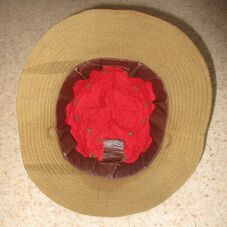
The hat was made of light cotton khaki fabric, with a broad semi-rigid sloping 7 cm wide brim and the crown of the hat was made up of four wedge shape panels. On the earlier NKVD M-35 Field Hat it had twelve ventilation holes, three on each crown panel and an adjustable cloth chinstrap was affixed on the inside of the headband and was tucked inside when not in use. The M-38 Field Hat had sixteen ventilation holes, four on each crown panel and the adjustable chin strap was fixed to the outside by two buttons above the brim. In order for the chin strap to be worn, below each button was a small button button hole in the brim, so that the chin strap could be detached and passed through and reattached to the buttons. A red star diameter 7.5 cm was sewn onto the front of the crown for all branches of service. The hat had a red material lining, which combined collectively with other hats was used for aerial recognition to indicate as 'friendly' troops on the ground.
Panama hats for motor or armoured troops were made of steel grey coloured material.The hat could also be worn under the steel helmet.
Order No. 61 of March 10, 1938, of NKO, USSR authorised for wear the sub tropical hat for troops and institutions of the Central Asian, North Caucasus and Transcaucasia Military Districts and for units located in Crimea. It was officially known as the M-38 Field Hat, but commonly referred to by troops as the 'Panamka',because of its similar appearance in shape to the 'Panama Hat' and was a development of the cotton subtropical helmet introduced for use by NKVD troops on December 27, 1935.
The hat was made of light cotton khaki fabric, with a broad semi-rigid sloping 7 cm wide brim and the crown of the hat was made up of four wedge shape panels. On the earlier NKVD M-35 Field Hat it had twelve ventilation holes, three on each crown panel and an adjustable cloth chinstrap was affixed on the inside of the headband and was tucked inside when not in use. The M-38 Field Hat had sixteen ventilation holes, four on each crown panel and the adjustable chin strap was fixed to the outside by two buttons above the brim. In order for the chin strap to be worn, below each button was a small button button hole in the brim, so that the chin strap could be detached and passed through and reattached to the buttons. A red star diameter 7.5 cm was sewn onto the front of the crown for all branches of service. The hat had a red material lining, which combined collectively with other hats was used for aerial recognition to indicate as 'friendly' troops on the ground.
Panama hats for motor or armoured troops were made of steel grey coloured material.The hat could also be worn under the steel helmet.
|
|
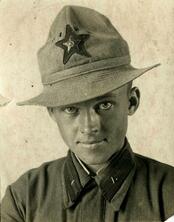
Image of Soviet Junior Sergeant wearing a M-35 Field Hat. Left: an original grade 1 example of a M-35 Field Hat.
|
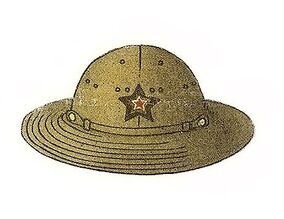
Uniform clothing manual image for M-38 Filed Hat, order 61 10th March 1938, NKO, USSR. Left: External and internal images of a reproduction M-38 subtropical hat.
|
|
|
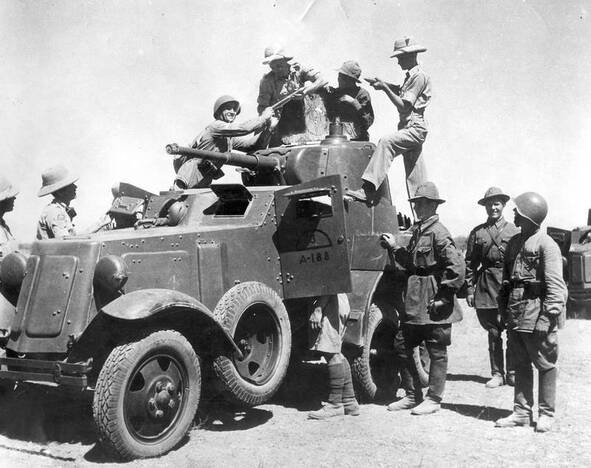
Op Countenance, the joint Anglo-Soviet operation to invade Persia 25th-31st August 1941. The operations strategic purpose was to ensure the safety of Allied supply lines to the USSR (The Persian Corridor), secure Iranian oil fields and to limit German influence in Iran. Soviet troops, some wearing Panamka's hats show British troops around a BM-10 Heavy Armoured Car.
Basic Uniform.
The uniforms of the period followed the same basic appearance and were modelled largely on the work clothes of the Russian peasant and incorporated traditional features.
GIMNASTIORKA (Tunic) was introduced into the Russian Imperial Army around 1870 for regiments stationed in Turkestan during hot summer months. It took the form of a loose fitting white linen "shirt-tunic" and was worn with shoulder-boards of the standard dark green tunic, which was worn during the remainder of the year.It was adopted into use by all branches of the Imperial Russian Army at the time of the Russo-Turkish War of 1877–1878. It was originally intended as a working dress during peacetime and patterned on the traditional Russian peasant smock and was subsequently adopted for ordinary duties and active service wear.
SHAROVARI (Breeches) were again based on the traditional work breeches of the peasant, being loose fitting at the hips, thighs and knees and tapered to a tighter fitting at the calves and lower leg.
Following the Russian Revolution in 1917 and the formation of the Red Army (Raboche Krest'yanskaya Krasnaya Armiya or RKKA) in 1918 a number of the uniform elements associated with the former army of the Tzar were abandoned by the Bolshevik regime. In the 1920s and early 1930s the Red Army uniforms displayed little distinction, particularly in the field where it was difficult to tell who was a commander from the enlisted man.
In 1935 a new uniform pattern was issued, Obr 1935. It had a fall collar on which the gorget patch (Pitlitsi) was worn and displayed the branch of service colours and insignia as well as the rank insignia.The uniforms came in various shades of khaki drab, known in Russian as "zashchitniy tsvet".
In 1941 a new subdued pattern Pitlitsi was authorised for use on the Obr 1935 tunic and was in the process of being introduced when Germany invaded the Soviet Union in June 1941. Both types of pitlitsi were seen in the field during the early period of the war.
In January 1943 the Obr 1943 pattern tunic was authorised which re introduced traditional Russian uniform elements once associated with the pre revolutionary army of the Czar, i.e. a two buttoned standing collar and the shoulder boards (Pogonii), on which the branch of service piping and insignia as well as rank insignia was worn. This pattern was in service with the Red Army throughout the remainder of the war and into the 1960's.
Both types of tunics would be worn with white linen collar liners (Podvorotnichok),a narrow piece of white fabric which was sewn on the inside of the collars and was introduced to reduce wear and tear on the collar and to reduce chafing. They were were changed daily, typically in the evening before lights out and were checked daily during morning inspection.
GIMNASTIORKA (Tunic) was introduced into the Russian Imperial Army around 1870 for regiments stationed in Turkestan during hot summer months. It took the form of a loose fitting white linen "shirt-tunic" and was worn with shoulder-boards of the standard dark green tunic, which was worn during the remainder of the year.It was adopted into use by all branches of the Imperial Russian Army at the time of the Russo-Turkish War of 1877–1878. It was originally intended as a working dress during peacetime and patterned on the traditional Russian peasant smock and was subsequently adopted for ordinary duties and active service wear.
SHAROVARI (Breeches) were again based on the traditional work breeches of the peasant, being loose fitting at the hips, thighs and knees and tapered to a tighter fitting at the calves and lower leg.
Following the Russian Revolution in 1917 and the formation of the Red Army (Raboche Krest'yanskaya Krasnaya Armiya or RKKA) in 1918 a number of the uniform elements associated with the former army of the Tzar were abandoned by the Bolshevik regime. In the 1920s and early 1930s the Red Army uniforms displayed little distinction, particularly in the field where it was difficult to tell who was a commander from the enlisted man.
In 1935 a new uniform pattern was issued, Obr 1935. It had a fall collar on which the gorget patch (Pitlitsi) was worn and displayed the branch of service colours and insignia as well as the rank insignia.The uniforms came in various shades of khaki drab, known in Russian as "zashchitniy tsvet".
In 1941 a new subdued pattern Pitlitsi was authorised for use on the Obr 1935 tunic and was in the process of being introduced when Germany invaded the Soviet Union in June 1941. Both types of pitlitsi were seen in the field during the early period of the war.
In January 1943 the Obr 1943 pattern tunic was authorised which re introduced traditional Russian uniform elements once associated with the pre revolutionary army of the Czar, i.e. a two buttoned standing collar and the shoulder boards (Pogonii), on which the branch of service piping and insignia as well as rank insignia was worn. This pattern was in service with the Red Army throughout the remainder of the war and into the 1960's.
Both types of tunics would be worn with white linen collar liners (Podvorotnichok),a narrow piece of white fabric which was sewn on the inside of the collars and was introduced to reduce wear and tear on the collar and to reduce chafing. They were were changed daily, typically in the evening before lights out and were checked daily during morning inspection.
Obr 1935 gimnastiorka.
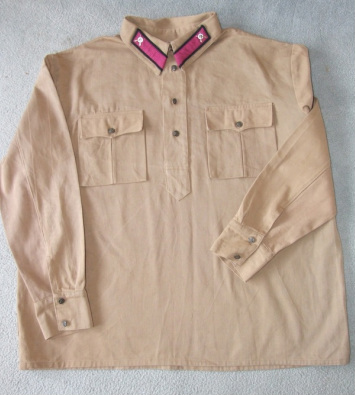
The shirt has a fall type collar on which is worn the pitlitsi (gorget patches). The pitlitsi were in branch of service colours with a small metal branch insignia badge and where the rank insignia were also worn.
On the front were two external breast pockets. Buttons were made of brass, with the star and hammer and sickle emblem. Some patterns had a fly cover which concealed the buttons on the front of the tunic. Officers tunics were piped in branch of service colours around the bottom edge of the collar and upper seam of the sleeve cuffs.
The appearance of the tunic was loose fitting and came in cotton for summer issue and wool for winter.
Buttons: size 14mm, which were also used on headwear and various pouches and bags during the wartime period.
On the front were two external breast pockets. Buttons were made of brass, with the star and hammer and sickle emblem. Some patterns had a fly cover which concealed the buttons on the front of the tunic. Officers tunics were piped in branch of service colours around the bottom edge of the collar and upper seam of the sleeve cuffs.
The appearance of the tunic was loose fitting and came in cotton for summer issue and wool for winter.
Buttons: size 14mm, which were also used on headwear and various pouches and bags during the wartime period.
Obr 1935 collar detail.
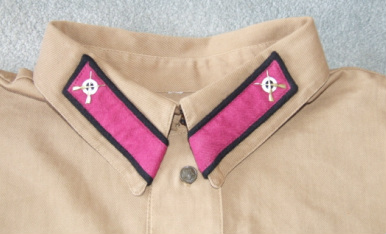
In this image showing a Krasnoarmyeets (Red Army man,which is equivilant to the rank of Private), in Rifle branch colours, ie magenta piped in black with the Rifle insignia badge, ie brass crossed rifles over a white enamalled target motif.
Obr 1941 Subdued pattern
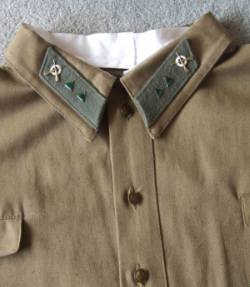
Following the experiences of the Red Army, particularly during the Winter War of 1939-40 with Finland, during which officers and NCOs could be easily identified in the field by the enemy, particularly by snipers, on 1st August 1941 subdued collar patches for the Obr 1935 tunic were introduced. It was a plain khaki/green patch which displayed the branch of service and rank insignia.
In the field the branch insignia also appeared to have been removed. Tunic buttons were also subdued, painted either green or black. The rank insignia in this image is that of a sergeant.
Buttons: size 14mm.
In the field the branch insignia also appeared to have been removed. Tunic buttons were also subdued, painted either green or black. The rank insignia in this image is that of a sergeant.
Buttons: size 14mm.
Obr 1943 gimnastiorka.
In January 1943 a new gimnastiorka was authorised which re introduced traditional Russian uniform elements, which were reminiscent of the former Tsarist Imperial Army.
The basic tunic was the same as the Obr 35, however a two buttoned stand up collar and shoulder boards (Pogonii) were adopted. Two variations of the tunic were on initial issue in 1943, i.e.with concealed breast pockets, only the pocket flaps/button were visible and were the issue for officers. EM and NCO's were issued tunics without any breast pockets at all. However, in 1944 NCO's and EM appeared to have been permitted to wear the officers issue tunic with pockets also. The shoulder boards were piped in branch of service colours and displayed branch and rank insignia. The tunic sleeves had elbow reinforcing patches. Officers M43 tunics were were piped in branch of service colours around the upper seam of the sleeve cuffs. Officers field tunics were generally unpiped.
Buttons: size 14mm for tunic and 18mm on the shoulder boards.
During the course of the war under the Lend Lease scheme the Soviets were supplied with Canadian and US made tunics, which were distinguishable from Soviet made patterns and were also seen worn with dished metal buttons and with plastic and Bakelite buttons.
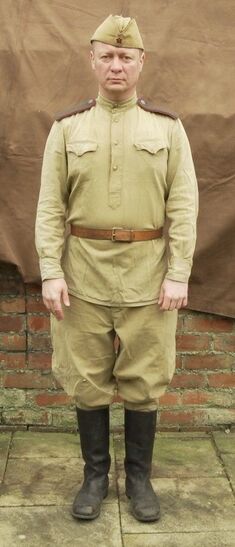
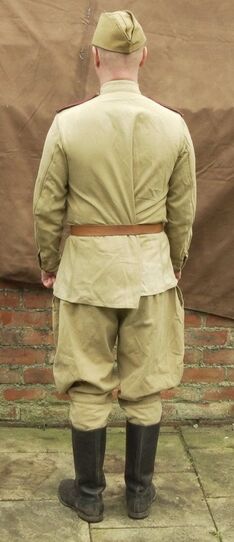
Below: A typical image of a Red Army man wearing a pocketed Obr 1943 gimnastiorka and showing the back and how it was to be regulation pleated.
In January 1943 a new gimnastiorka was authorised which re introduced traditional Russian uniform elements, which were reminiscent of the former Tsarist Imperial Army.
The basic tunic was the same as the Obr 35, however a two buttoned stand up collar and shoulder boards (Pogonii) were adopted. Two variations of the tunic were on initial issue in 1943, i.e.with concealed breast pockets, only the pocket flaps/button were visible and were the issue for officers. EM and NCO's were issued tunics without any breast pockets at all. However, in 1944 NCO's and EM appeared to have been permitted to wear the officers issue tunic with pockets also. The shoulder boards were piped in branch of service colours and displayed branch and rank insignia. The tunic sleeves had elbow reinforcing patches. Officers M43 tunics were were piped in branch of service colours around the upper seam of the sleeve cuffs. Officers field tunics were generally unpiped.
Buttons: size 14mm for tunic and 18mm on the shoulder boards.
During the course of the war under the Lend Lease scheme the Soviets were supplied with Canadian and US made tunics, which were distinguishable from Soviet made patterns and were also seen worn with dished metal buttons and with plastic and Bakelite buttons.
Below: A typical image of a Red Army man wearing a pocketed Obr 1943 gimnastiorka and showing the back and how it was to be regulation pleated.
|
|
|
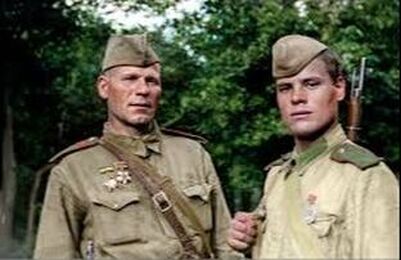
|
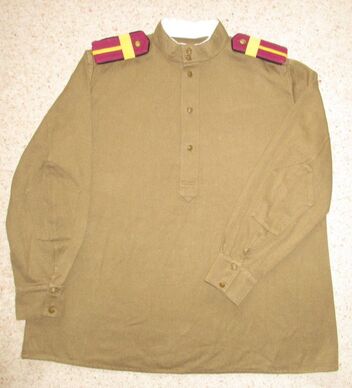
Above: Left, Obr 1943 pocketless gimnastiorka with Sgt Major's service/walking out shoulder boards. Right, Two soldiers wearing the Obr 1935 gimnastiorka with the newly introduced Obr 1943 shoulder boards (field pattern). This was a commonly seen practice until stockpiles of the M 1935 gimnastiorka diminished and the widespread introduction and issue of the Obr 1943 tunic. The M 1943 tunic was introduced on 25th January 1943 and issue was supposedly to be completed within two months! The tunic remained in service until 1969.
Obr 1943 wool tunic.
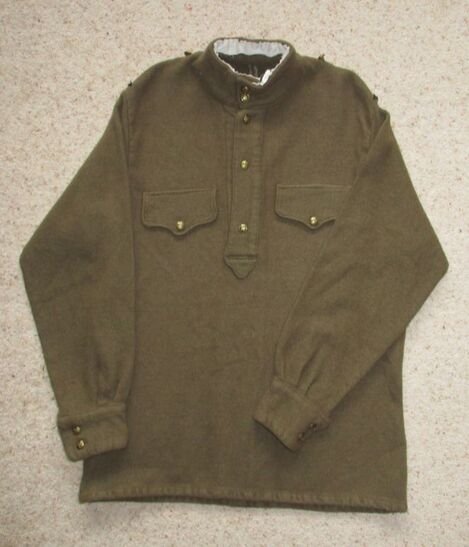
An example of an Obr 1943 gimnastiorka made in wool material.
A winter issue clothing item which also included woollen breeches (sharovari) Wool uniforms tended to be a darker shade of khaki and retained their dark colour as they were generally worn under the greatcoat and therefore not exposed to fading by sunlight, whereas summer issue cotton uniforms faded with use and were lighter in colour and appearance.
Depending on where the soldier was serving would dictate when the winter clothing was issued i.e. in the northern part of the Soviet Union winter could set in from late September, whereas further south it might not set until November or December. The authority to issue winter clothing was granted from mid October to mid April by the office of the relevant Military District Commander whereby the respective local Garrison Commander would order it's issue subject to the local weather conditions. Winter clothing was usually withdrawn in May and summer cotton clothing was issued.
Items such as the greatcoat, jersey and woollen gloves were apparently maintained all year round for use as necessary on night time duties etc.
Note: The former USSR consisted of approximately one-sixth of the Earth's land surface and therefore encompassed climatic diversity and zones across its varying states. During the GPW 1941-45 the USSR had eight different time zones,which added up to plus 10-11 hours on Moscow's " Decree Time", that had been introduced in June 1930 and had subsequently added plus 1 hour across the entire USSR, i.e similar to daylight saving time, which had been previously introduced in some countries during WW1.
A winter issue clothing item which also included woollen breeches (sharovari) Wool uniforms tended to be a darker shade of khaki and retained their dark colour as they were generally worn under the greatcoat and therefore not exposed to fading by sunlight, whereas summer issue cotton uniforms faded with use and were lighter in colour and appearance.
Depending on where the soldier was serving would dictate when the winter clothing was issued i.e. in the northern part of the Soviet Union winter could set in from late September, whereas further south it might not set until November or December. The authority to issue winter clothing was granted from mid October to mid April by the office of the relevant Military District Commander whereby the respective local Garrison Commander would order it's issue subject to the local weather conditions. Winter clothing was usually withdrawn in May and summer cotton clothing was issued.
Items such as the greatcoat, jersey and woollen gloves were apparently maintained all year round for use as necessary on night time duties etc.
Note: The former USSR consisted of approximately one-sixth of the Earth's land surface and therefore encompassed climatic diversity and zones across its varying states. During the GPW 1941-45 the USSR had eight different time zones,which added up to plus 10-11 hours on Moscow's " Decree Time", that had been introduced in June 1930 and had subsequently added plus 1 hour across the entire USSR, i.e similar to daylight saving time, which had been previously introduced in some countries during WW1.
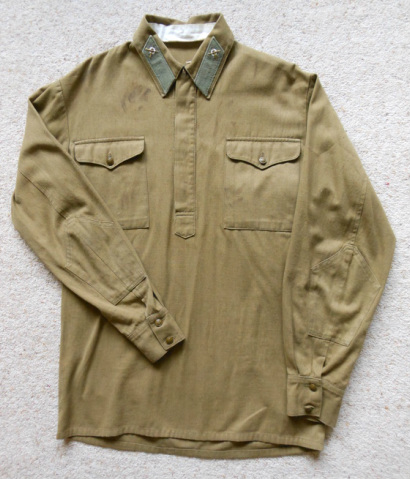
Obr 1935 gimnastiorka with concealed button fly front. It has the Obr 1941 subdued pitlitsi collar tabs.
|
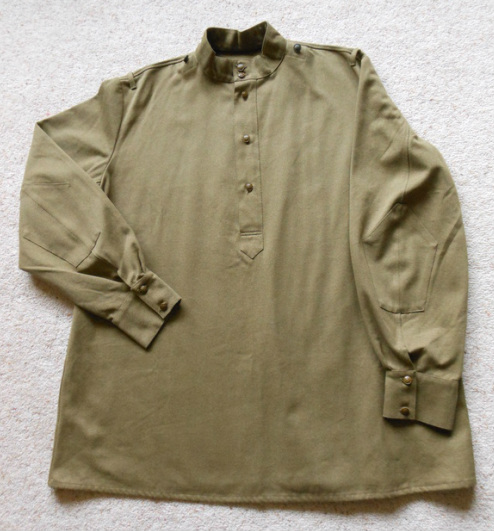
Obr 1943 'pocketless' gimnastiorka.
|
Gimnastiorka elbows.
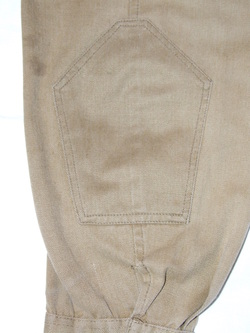
On some patterns of the gimnastiorka tunic there were elbow reinforcing patches added.
Detail of reinforcing.
Women in the Red Army.
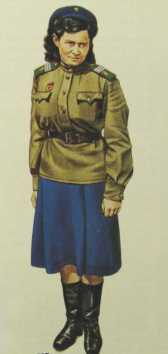
During the Great Patriotic War about 900,000 women served in Red Army. As in other armies of the day women performed traditional roles in the military, such as in medicine, administrative, communications, judical and other auxiliary branches. However, women in the Red Army undertook front line combat roles in large numbers, far greater than any other army of that time.
They served as snipers, combat medics, tank and armoured vehicle crews, crew served weapons and with partisan forces. There was also three famous all women Red Army Air Force regiments who performed 30,000 combat missions during the war.
Almost 200,000 women were decorated during the war and 89 received the highest award, Hero of the Soviet Union.
Womens uniforms.
Pre and early war uniforms consisted of the standard issue gimnastiorka as worn by the men, however they were tailored and seamed to fit the female upper body form and the front button fly was reversed to that of the mens tunics. It was worn with a dark blue coloured beret with an enamelled cap star. A matching blue coloured side pleated skirt (Yubka) was worn, both for field and service use. In 1942 a khaki coloured beret and skirt was issued to replace the blue issue beret and skirt, which largely thereafter was worn as service dress. Officially female personnel were also issued additional head wear akin to the men and appropriate to their respective role i.e. pilotka, sailors 'Beskozirka' cap for VMF personnel, ushanka, flying helmet, tankoshlem(armoured vehicle crews), parachutist and the steel helmet. There are period images of female personnel wearing the furazhka forage caps during the GPW, however this had not been officially authorised since WW1 and the Revolutionary periods.
In 1941 a one piece dress combining the gimnastiorka and skirt was introduced and was worn in non combative or service dress circumstances. In 1943 when the new uniform regulations were introduced, the dress was updated with the two button stand up collar and shoulder boards. High boots were worn in the field and shoes with ankle socks were often seen worn in non combative roles with the skirt/dress. Beige coloured hose or during winter months a darker coloured knitted hose would have been also worn beneath the skirt/dress.
Generally during the war, particularly in the field women made do and wore and adapted the same issue uniforms as worn by the men.
In 1941 a one piece dress combining the gimnastiorka and skirt was introduced and was worn in non combative or service dress circumstances. In 1943 when the new uniform regulations were introduced, the dress was updated with the two button stand up collar and shoulder boards. High boots were worn in the field and shoes with ankle socks were often seen worn in non combative roles with the skirt/dress. Beige coloured hose or during winter months a darker coloured knitted hose would have been also worn beneath the skirt/dress.
Generally during the war, particularly in the field women made do and wore and adapted the same issue uniforms as worn by the men.
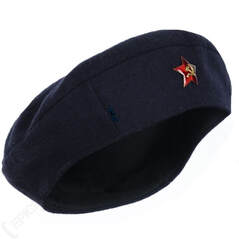
Women's Obr 1936 service dress beret. It was made of dark blue wool and was unlined and without a head/sweatband and it was adorned with a red enamelled cap star. The beret was often seen worn at a jaunty angle on the back of the wearers head
Obr 1941 pattern dress.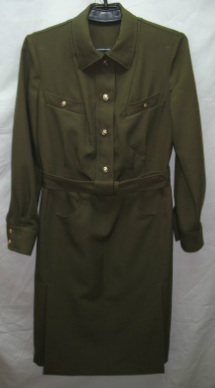
Order NKO No. 261 3rd August 1941 authorised the issue of a summer cotton or winter woollen one piece dress for female military personnel of the Red Army.
It had two slanted false pockets with buttons on the breast and the skirt was side pleated. There was a large pocket on the front of the skirt with a pocket slit on each front hip. A matching cloth waist belt was permanently fitted to the dress. The 1943 pattern dress was similar to the 1941 pattern, but had a two button standing collar and was worn with shoulder boards. |
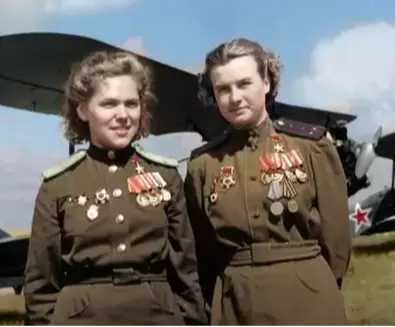
Obr 1943 pattern dress.
Two highly decorated pilots of the all female 588th Night Bomber Regiment (Night Witches) wearing the 1943 pattern dress. Each pilot has been awarded Hero of the Soviet Union Gold Star. The Regiment undertook over 30,000 missions in total, equivalent to about 800 per pilot and navigator. They lost a total of 30 pilots and 24 flyers of the regiment were awarded the Gold Star |
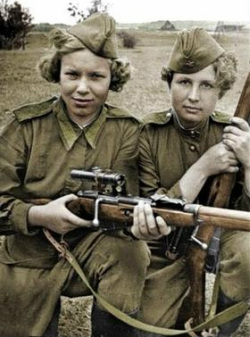 Female snipers. Note the reversed fly fronts of the female pattern gymnastiorka to that of their male counterparts.
The sniper on the left wears the M35 tunic with M43 shoulder boards and on the right is wearing a M43 tunic. |
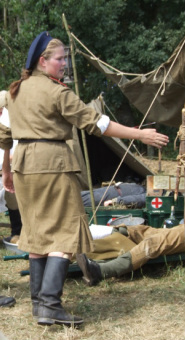 A female medic wearing the Obr 1942 pattern khaki skirt, which shows the folds of the side pleating. |
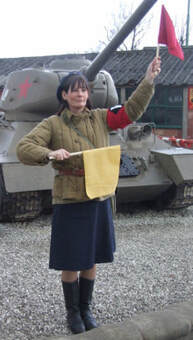
One of the most common roles performed by women was that of the military traffic control branch, the Rukovodstvo.
Seen here wearing the Obr 1938 blue coloured skirt and beret.
The Rukovodstvo ensured vehicular traffic was kept moving to the front lines.Worn whilst on duty was a red armband with a black cloth diamond or a round shape bearing the Cyrillic letter P, for Rukovodstvo.
|
Yatyelnaya ryubaka or undershirt.
Two patterns of under shirt would have been encountered during the war. Obr 1935 had a V neck line without a collar and the Obr 1943 had a short and more rounded collar line and each reflected the line of the respective gimnastiorka collar patterns. Both types had a half buttoned front with two or three button and with loose fitting cuffs without buttons.
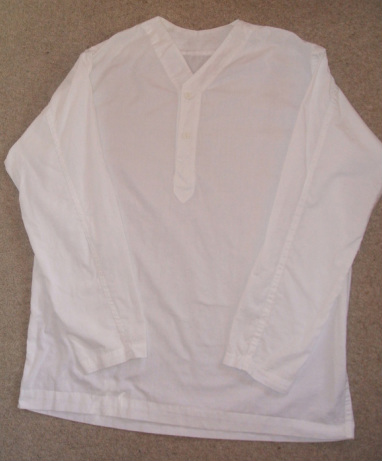
Obr 35 undershirt.
Pogonii or shoulder boards.
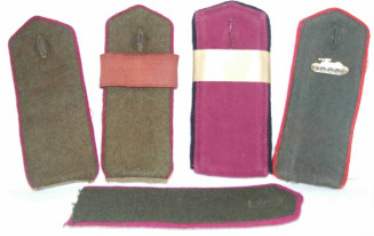
Two patterns of shoulder boards would have been evident during the war.
FIELD patterns were in khaki cloth and were piped in branch of service colours and with branch and rank insignia.
Rifle and administrative personnel did not wear branch of service insignia on their pogonii.
SERVICE or WALKING OUT boards would have been worn when not on active field duty. The boards were in branch colours and piped in secondary branch colours, ie for Rifle units the whole board was coloured magenta and the piping was in black. Unit numerals were often stencilled on the service boards.
From left. Rifle unit field-Krasnoarmyeets (Pte), Rifle unit field-Starshiy Serzhant (Senior Sgt), Rifle unit service-(Senior Sgt), Armoured unit field (Pte) and Rifle unit field (Pte) sew on type pogonii.
See INSIGNIA Section for more information on Rank and Insignia.
Sharovari or breeches.
|
|
Based on traditional peasant work breeches, they are full fitting at the hips and thighs and tighter fitting at the knees and lower leg. In 1929 the regulations stipulated that the summer issue trousers were made without knee reinforcements, but were later implemented in 1931.
During the course of the war two patterns of breeches would have been encountered. Pre & early war M35, which had a broad high waistband and had buttons so that braces/suspenders could be worn. Incorporated centrally on the rear waistband was a "V" shaped gusset and a half belt with a buckle for adjustment and patterns either without or later with knee reinforcements.
The M43 breeches differed little in appearance from the M35 breeches, other than a narrower waistband with double cloth loops attached at the front and with single loops at the hips and rear to to be worn with a waist belt and the cut of the legs were slightly shorter The buttons for braces/suspenders were omitted, although soldiers did sew on buttons so that braces/suspenders could be worn with the M43 breeches.
The front fly had 4 buttons and a hook/eye fastener and there was a pocket on each hip and an additional pocket on the right rear with button flap, which appeared mid war period. There was a small fob pocket on the front left of the waistband,which was intended to store the soldiers identification document tube, but was not always present. The breeches legs were tapered and to allow the foot through the bottom the outside seam had a side vent. The vent was secured with either a tie tape, two buttons or a combination of buttons and a cloth 'stirrup' strap which passed under the wearers instep, which in turn secured the top of the portyanki foot wraps in place.
Breeches with reinforcing patches on the knees are associated with enlisted men's issue, whereas officers issue breeches had no knee patches. However, during the course of the war enlisted men were issued with either type of breeches and it is estimated around 20% were with knee reinforcements. Officers breeches were piped in branch of service colours along the outer seam and field breeches were generally unpiped. Note: Officers were normally given a monetary allowance to purchase privately tailored made uniform items of better quality, but as the war progressed officers would have also been supplied with regular issue field uniform stocks.
During the course of the war under the Lend Lease scheme the Soviets were supplied with Canadian and US made breeches, which were distinguishable from Soviet made patterns and were also seen worn with dished metal buttons and with plastic and Bakelite buttons.
During the course of the war two patterns of breeches would have been encountered. Pre & early war M35, which had a broad high waistband and had buttons so that braces/suspenders could be worn. Incorporated centrally on the rear waistband was a "V" shaped gusset and a half belt with a buckle for adjustment and patterns either without or later with knee reinforcements.
The M43 breeches differed little in appearance from the M35 breeches, other than a narrower waistband with double cloth loops attached at the front and with single loops at the hips and rear to to be worn with a waist belt and the cut of the legs were slightly shorter The buttons for braces/suspenders were omitted, although soldiers did sew on buttons so that braces/suspenders could be worn with the M43 breeches.
The front fly had 4 buttons and a hook/eye fastener and there was a pocket on each hip and an additional pocket on the right rear with button flap, which appeared mid war period. There was a small fob pocket on the front left of the waistband,which was intended to store the soldiers identification document tube, but was not always present. The breeches legs were tapered and to allow the foot through the bottom the outside seam had a side vent. The vent was secured with either a tie tape, two buttons or a combination of buttons and a cloth 'stirrup' strap which passed under the wearers instep, which in turn secured the top of the portyanki foot wraps in place.
Breeches with reinforcing patches on the knees are associated with enlisted men's issue, whereas officers issue breeches had no knee patches. However, during the course of the war enlisted men were issued with either type of breeches and it is estimated around 20% were with knee reinforcements. Officers breeches were piped in branch of service colours along the outer seam and field breeches were generally unpiped. Note: Officers were normally given a monetary allowance to purchase privately tailored made uniform items of better quality, but as the war progressed officers would have also been supplied with regular issue field uniform stocks.
During the course of the war under the Lend Lease scheme the Soviets were supplied with Canadian and US made breeches, which were distinguishable from Soviet made patterns and were also seen worn with dished metal buttons and with plastic and Bakelite buttons.
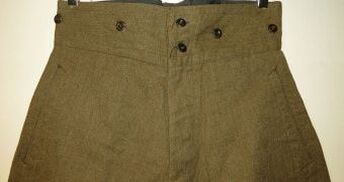
M35 breeches front view.The waistband is much wider than the M43 breeches which had diamond shaped reinforcing stitching on it.
|
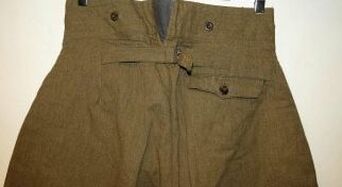
M35 breeches rear view, showing belt adjustment buckle and rear pocket.
|
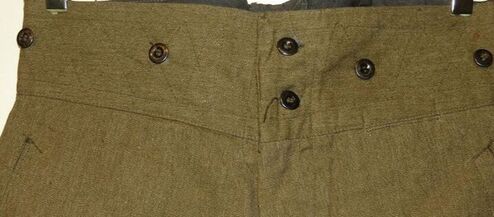
M35 breeches, showing diamond shaped reinforcing stitching on the waistband.
|
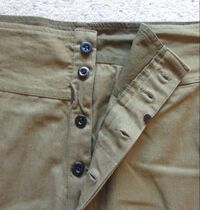
M35 breeches, showing button fly arrangement. Wartime breeches usually had four buttons on the fly with a hook & eye clip arrangement.
|
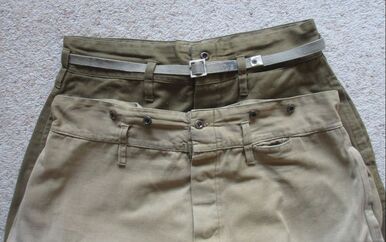
M43 breeches. Top: showing worn with a waist belt. Bottom: with buttons attached to be worn with braces/suspenders. Note the small fob pocket on the front left of the waistband.
|
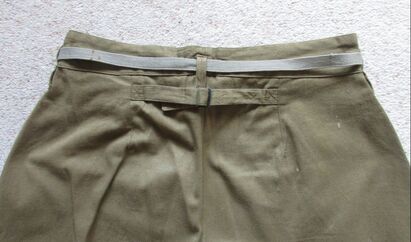
M43 breeches rear adjustment belt.
|
Sharovari.
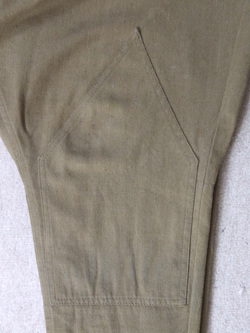
Knee patch detail of war time pattern breeches.
Note: On post war example breeches the knee patch was finished square at the top as opposed to pointed on war time issue breeches.
Botinki c obmotki or ankle boots with puttees.
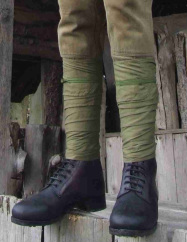
Ankle boots were supposedly issued for summer wear and sapogi high boots for winter. In reality both types of boots were seen in the field, regardless of the season. Boots came in black and dark brown leather and without an external toe cap. Later in the war, Lend Lease boots from Britain, Canada and the USA were evident. Puttees were made from both wool and cotton canvas and came in various colours, including khaki, black and dark blue and were often fabricated in the field using old blanket material.
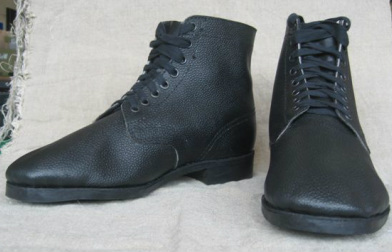
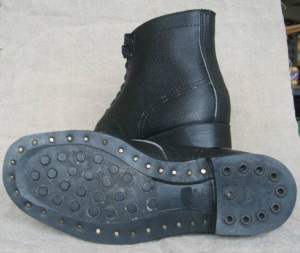
Ankle boots with wartime pattern pupyrchatoy sole.
|
|
Sapogi "tarpaulin" high boots.
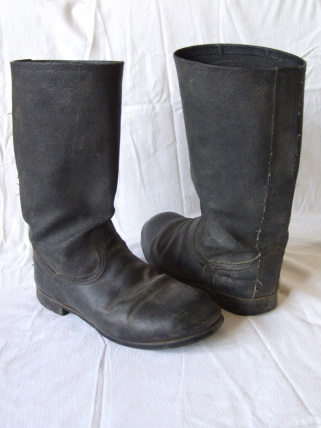
The history of the "Kirza SK" boots.
In the late 19th-early 20th century Russia faced major problems of supplying footwear for both its civilian population and its army due to the lack of natural leather materials. A chemist named Ivan V. Plotnikov is often credited as the inventor of the synthetic "tarpaulin" material known as "kirza". However, Mikhail M. Pomortsev, who had studied in a number of scientific fields, a graduate of the Mikhailovsky Artillery School and the Academy of the General Staff,(later a Major General), was the first to successfully create "tarpaulin" in 1903-04, initially for military use. During WW1 Pomortsev offered the Military Industrial Committee to make synthetic boots for the army free of charge. However, the manufacturers of leather boots on the grounds that production of artificial leather was unprofitable, intervened in every possible way to prevent the order to proceed. After the death of Pomortsev in 1916, the leather manufacturers completely undermined the viability of kirza and as a result his surviving developments were not pursued any further at that time.
During the 1920-30's a number of scientists were involved in the further development of kirza, including Alexander M.Khomutov and Ivan V.Plotnikov in 1937-38. In 1939 an experimental batch of soldiers' boots with tops from "Kirza SK" was made, which was also trialled by the RKKA during the Winter War. In 1940 Plotnikov became the chief engineer for the supply Kirza SK boots for the army during the Great Patriotic War.
Kirza SK is a pig leather imitation based on multi-layer coarse cotton fabric, impregnated by a film-forming synthetic rubber type substances involving a vacuum manufacturing process, which produced a fabric that is impervious to water, yet with a breathable membrane to let air through. The name kirza is supposed to have derived from an acronym from KIRovsky ZAvod (Kirov Plant), but the actual name of the factory where it was manufactured was the Iskozh Plant, Kirov Region (an acronym for "iskusstvennaya kozha" - artificial leather) To the troops they were simply known as "tarpaulin" boots or "shit trampers!"
Pre war enlisted men's high boots were made all in leather and were known as 'yuftsi sapogi'. "Yuft" (Russian leather) where birch oil is worked into the leather during the tanning process, which makes it particularly hard-wearing, flexible and resistant to water.
During the Winter War with Finland 1939-40, synthetic materials were introduced into boot manufacturing. Mass production of kirza boots began in autumn/winter of 1941 and were not particularly popular with the troops, thereafter the yuftsi sapogi became a sought after and prized possession by enlisted personnel.
Enlisted men's Kirza SK boots had a moulded rubberised sole, with a leather lower foot and the uppers were made from a canvas synthetic tarpaulin material with the appearance of pig leather.
The sole on war time patterns, known as 'pupyrchatoy', had 26 moulded stud like protrusions on them. Later post war boots, 1970's onwards have a"zig zag" pattern on the soles and are sometimes referred as "tractor" soles and are commonly used within the international Soviet GPW period re-enacting community. There are suppliers who do stock post war made boots, resoled with surplus or repro wartime pattern soles and are period authentic looking, but do tend to be more expensive!
The boots were generally loose fitting and worn with foot wraps (Portyanki), as socks were not issued to enlisted men. During cold weather additional flannel foot wraps could be worn to better insulate the wearers feet, often with other material such as newspaper and straw as further insulation. A pair of insoles were issued for use during the warmer summer months for use with the thinner linen footwraps.
Officers field boots were made in leather and were of a better quality. The leather was very supple which gave the boots the appearance of many folds and were not as high as the EM's boots, finishing about mid calf. The boots had smooth leather soles.
Note: Kirza derives from the English word "kersey", a coarse woollen spun heavy cloth, from the village of Kersey, Suffolk, England, from where it was originally made during medieval times and from where it takes its name from. Later on was made in many other places in England too.
For more on the history and development of Kirza boots visit:
https://elementy.ru/nauchno-populyarnaya_biblioteka/431941
In the late 19th-early 20th century Russia faced major problems of supplying footwear for both its civilian population and its army due to the lack of natural leather materials. A chemist named Ivan V. Plotnikov is often credited as the inventor of the synthetic "tarpaulin" material known as "kirza". However, Mikhail M. Pomortsev, who had studied in a number of scientific fields, a graduate of the Mikhailovsky Artillery School and the Academy of the General Staff,(later a Major General), was the first to successfully create "tarpaulin" in 1903-04, initially for military use. During WW1 Pomortsev offered the Military Industrial Committee to make synthetic boots for the army free of charge. However, the manufacturers of leather boots on the grounds that production of artificial leather was unprofitable, intervened in every possible way to prevent the order to proceed. After the death of Pomortsev in 1916, the leather manufacturers completely undermined the viability of kirza and as a result his surviving developments were not pursued any further at that time.
During the 1920-30's a number of scientists were involved in the further development of kirza, including Alexander M.Khomutov and Ivan V.Plotnikov in 1937-38. In 1939 an experimental batch of soldiers' boots with tops from "Kirza SK" was made, which was also trialled by the RKKA during the Winter War. In 1940 Plotnikov became the chief engineer for the supply Kirza SK boots for the army during the Great Patriotic War.
Kirza SK is a pig leather imitation based on multi-layer coarse cotton fabric, impregnated by a film-forming synthetic rubber type substances involving a vacuum manufacturing process, which produced a fabric that is impervious to water, yet with a breathable membrane to let air through. The name kirza is supposed to have derived from an acronym from KIRovsky ZAvod (Kirov Plant), but the actual name of the factory where it was manufactured was the Iskozh Plant, Kirov Region (an acronym for "iskusstvennaya kozha" - artificial leather) To the troops they were simply known as "tarpaulin" boots or "shit trampers!"
Pre war enlisted men's high boots were made all in leather and were known as 'yuftsi sapogi'. "Yuft" (Russian leather) where birch oil is worked into the leather during the tanning process, which makes it particularly hard-wearing, flexible and resistant to water.
During the Winter War with Finland 1939-40, synthetic materials were introduced into boot manufacturing. Mass production of kirza boots began in autumn/winter of 1941 and were not particularly popular with the troops, thereafter the yuftsi sapogi became a sought after and prized possession by enlisted personnel.
Enlisted men's Kirza SK boots had a moulded rubberised sole, with a leather lower foot and the uppers were made from a canvas synthetic tarpaulin material with the appearance of pig leather.
The sole on war time patterns, known as 'pupyrchatoy', had 26 moulded stud like protrusions on them. Later post war boots, 1970's onwards have a"zig zag" pattern on the soles and are sometimes referred as "tractor" soles and are commonly used within the international Soviet GPW period re-enacting community. There are suppliers who do stock post war made boots, resoled with surplus or repro wartime pattern soles and are period authentic looking, but do tend to be more expensive!
The boots were generally loose fitting and worn with foot wraps (Portyanki), as socks were not issued to enlisted men. During cold weather additional flannel foot wraps could be worn to better insulate the wearers feet, often with other material such as newspaper and straw as further insulation. A pair of insoles were issued for use during the warmer summer months for use with the thinner linen footwraps.
Officers field boots were made in leather and were of a better quality. The leather was very supple which gave the boots the appearance of many folds and were not as high as the EM's boots, finishing about mid calf. The boots had smooth leather soles.
Note: Kirza derives from the English word "kersey", a coarse woollen spun heavy cloth, from the village of Kersey, Suffolk, England, from where it was originally made during medieval times and from where it takes its name from. Later on was made in many other places in England too.
For more on the history and development of Kirza boots visit:
https://elementy.ru/nauchno-populyarnaya_biblioteka/431941
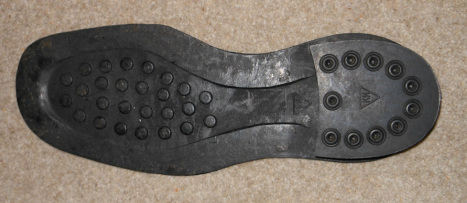
Wartime pattern pupyrchatoy replacement sole and heel for the sapogi boot.
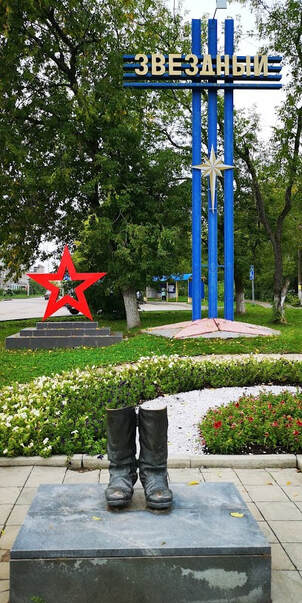
In the small town of Zvezdnyi in the Perm District, are a pair are bronze "Soldiers Boots", weighing at 40 kg. A monument not only a homage to the military boots, but also to the first successful domestic composite material made in Russia using synthetic components.
|
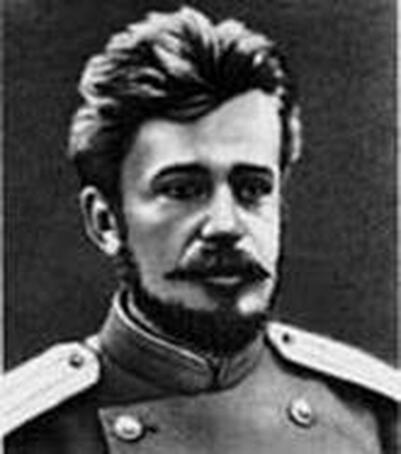
Mikhail Mikhailovich Pomortsev, Born July 24, 1851–Died July 2, 1916, was a Russian military officer, meteorologist and engineer and one of the pioneers in the field of Russian aeronautics and rocketry who conducted research into solid-propellant rockets in the early 20th century. In his military career, Pomortsev reached the rank of Artillery General and also taught at the Mikhailovskaya Military Artillery Academy in St Petersburg.
|
Ryemyen poyasnoi or waist belt.
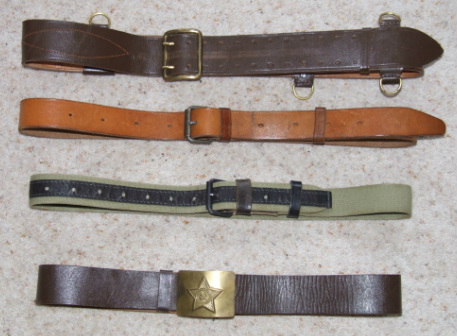
Enlisted men wore a plain belt 35mm wide and sergeants belts were 45mm wide, in mid or dark brown coloured leather, with an open buckle, roller and single tine.
Obr 1935 officers belts were 50mm wide wide and had an open brass buckle with a star and hammer and sickle embossed on it. It was seen worn with a shoulder strap, worn " Sam Browne" style.
Later in the war officers belts had a plain open buckle with two fastening tines. By the mid war period an economy belt appeared, which was similar to the earlier EM belt, but was made from webbing material with a synthetic reinforcing.
The soldier would mark his service number on the inside. Belts were issued extra long, so that in winter time it could be worn with the padded jacket and greatcoat. Occasionally encountered in the field was the Obr 1936 belt, which was issued to military schools and cadets and therefore do not permit its use in our impressions.
From top: Obr 32/43 officers, enlisted mans, economy and Obr 36 belts.
Obr 1935 officers belts were 50mm wide wide and had an open brass buckle with a star and hammer and sickle embossed on it. It was seen worn with a shoulder strap, worn " Sam Browne" style.
Later in the war officers belts had a plain open buckle with two fastening tines. By the mid war period an economy belt appeared, which was similar to the earlier EM belt, but was made from webbing material with a synthetic reinforcing.
The soldier would mark his service number on the inside. Belts were issued extra long, so that in winter time it could be worn with the padded jacket and greatcoat. Occasionally encountered in the field was the Obr 1936 belt, which was issued to military schools and cadets and therefore do not permit its use in our impressions.
From top: Obr 32/43 officers, enlisted mans, economy and Obr 36 belts.
Ryemyen Komandiya or Officers belt.
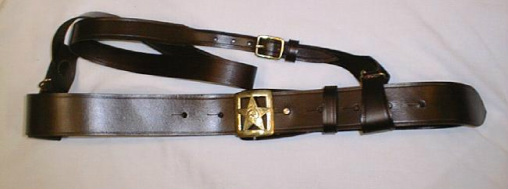
Officers Obr 1935 belt with shoulder strap.
The leather belt was 50mm wide with an open rectangular brass buckle frame 65 x 58mm, with a stamped 50 mm diameter brass star with crossed hammer and sickle motif soldered to the outer side of the frame. The belt was closed by inserting the end of the belt behind the buckle which was then held in place with a brass peg with a spherical head pushed through holes on the belt and further secured with a leather runner loop.
The shoulder strap, which had a brass buckle to adjust its length, was attached to the belt using two runner loops each with brass D rings and an additional loop with a D ring which offered support when a pistol, map case or officers valise case was worn on the belt. The leather work was either mid or dark brown in colour.
The leather belt was 50mm wide with an open rectangular brass buckle frame 65 x 58mm, with a stamped 50 mm diameter brass star with crossed hammer and sickle motif soldered to the outer side of the frame. The belt was closed by inserting the end of the belt behind the buckle which was then held in place with a brass peg with a spherical head pushed through holes on the belt and further secured with a leather runner loop.
The shoulder strap, which had a brass buckle to adjust its length, was attached to the belt using two runner loops each with brass D rings and an additional loop with a D ring which offered support when a pistol, map case or officers valise case was worn on the belt. The leather work was either mid or dark brown in colour.
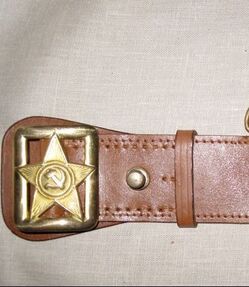
Detail of the officers Obr 1935 belt buckle.
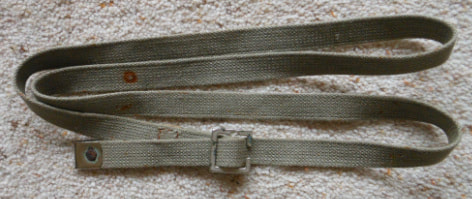
The trouser belt, ryemyen bryiochniy was a narrow web belt with an open untined buckle with either a metal or leather reinforcing on the end.
The Guards badge.
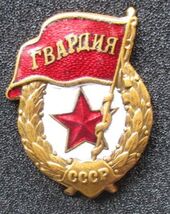
Units who were awarded Guards honorific status were permitted to wear the Guards badge.
The titles were first introduced on 18th September 1941, by order of the Supreme Command
and Prikaz 308 of the People's Commissar of Defence for distinguished service during the Yelnya
Offensive. Units nominated also received special Guards Banners accordingly.
On 21st May 1942 Guards rank titles were introduced and the Guards badge was authorised to be worn on the right breast of the gimnastiorka. Guards units were generally better manned, equipped, fed and paid than regular Rifle units for most of the war.
War time badges were made of brass and enamelling, the wreath and detailing appeared to be of a heavier finish. Early post war examples could be distinguished by the different pattern in the swirling on the red enamelling, the deeper furl and fringe on the bottom of the banner. Badges that appear similar and made from white metal are from the 1970's period onward and are not suitable for a war time impression.
The titles were first introduced on 18th September 1941, by order of the Supreme Command
and Prikaz 308 of the People's Commissar of Defence for distinguished service during the Yelnya
Offensive. Units nominated also received special Guards Banners accordingly.
On 21st May 1942 Guards rank titles were introduced and the Guards badge was authorised to be worn on the right breast of the gimnastiorka. Guards units were generally better manned, equipped, fed and paid than regular Rifle units for most of the war.
War time badges were made of brass and enamelling, the wreath and detailing appeared to be of a heavier finish. Early post war examples could be distinguished by the different pattern in the swirling on the red enamelling, the deeper furl and fringe on the bottom of the banner. Badges that appear similar and made from white metal are from the 1970's period onward and are not suitable for a war time impression.
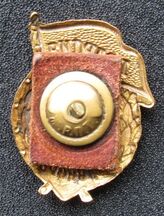
Tip: A small leather patch worn on the inside of the tunic and between the screw back will protect the tunic material from wear and reduce the length of the pin and prevent it protruding into your chest!
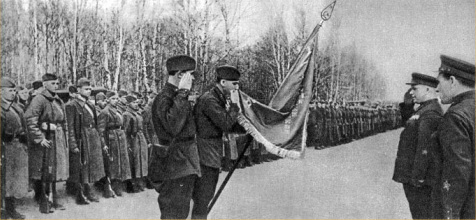 A newly formed Guards unit receives it's Guards Banner. |
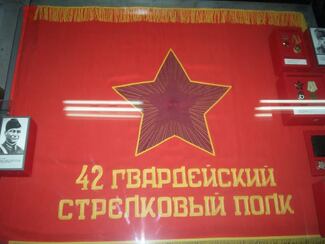
Banner of 42 Guards Rifle Regiment. Image taken at the Stalingrad Panorama Museum. The photograph on the left is of Colonel Yelin, who commanded the regiment during the battles in the city.
|
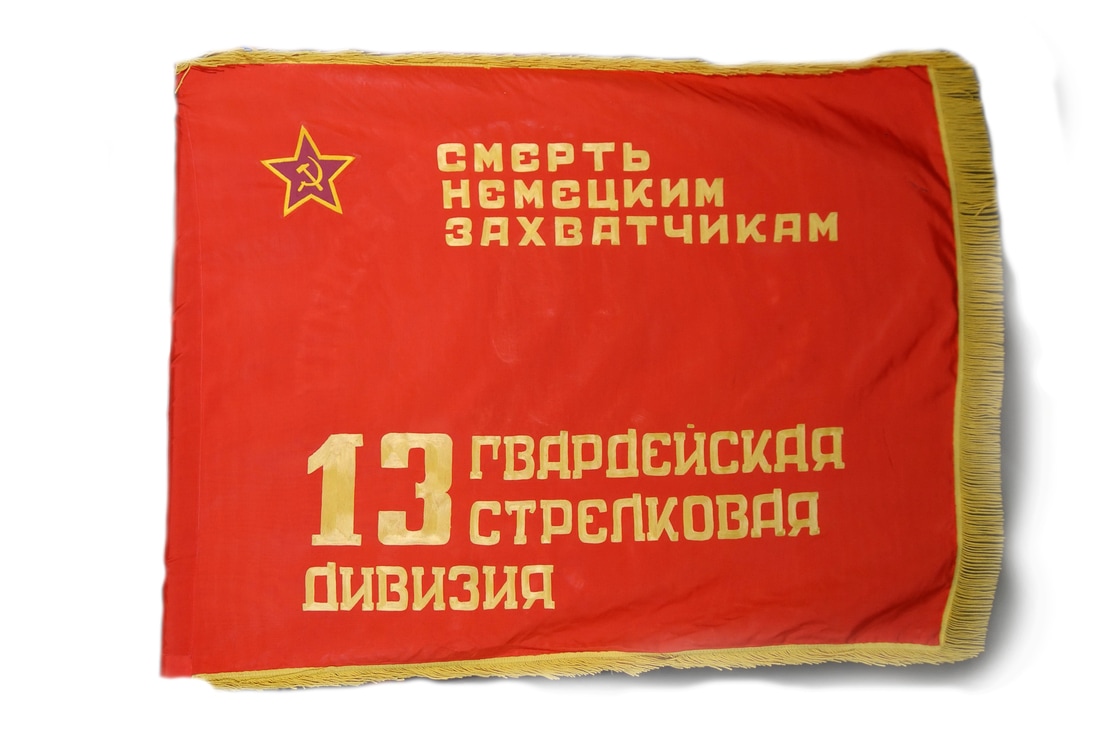
Guards Divisional Banner, bearing 13th Guards title.
|
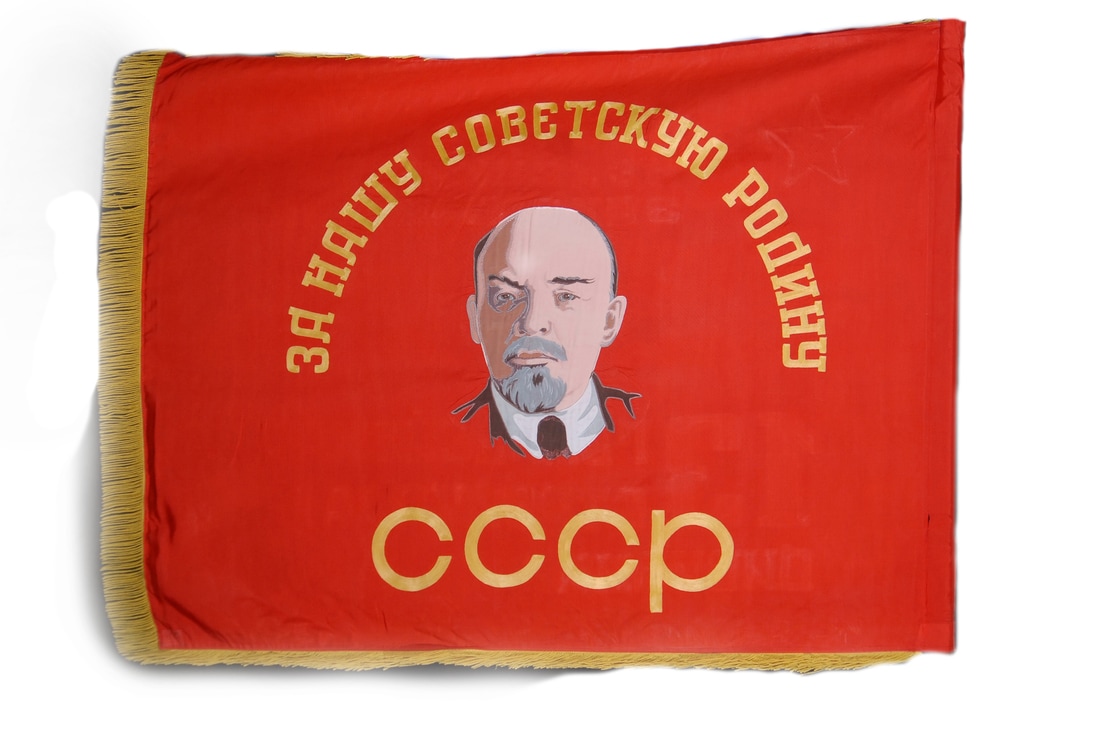
Guards Divisional Banner, obverse side bearing image of Lenin.
|
Guards badge.
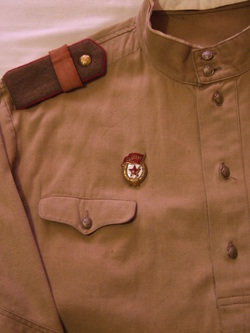
This image shows the prescribed correct position to wear the Guards badge. The badge was worn over the right breast pocket flap and in line with its upper left edge. However, from archive photographs of the period, the badge was seen worn almost anywhere on the right breast above and below the pocket flap.
Soldiers in Guards units were referred to as Gvardeytsy (Guardsmen) and singularly as Gvardeyeets (Guardsman).
Soldiers in Guards units were referred to as Gvardeytsy (Guardsmen) and singularly as Gvardeyeets (Guardsman).
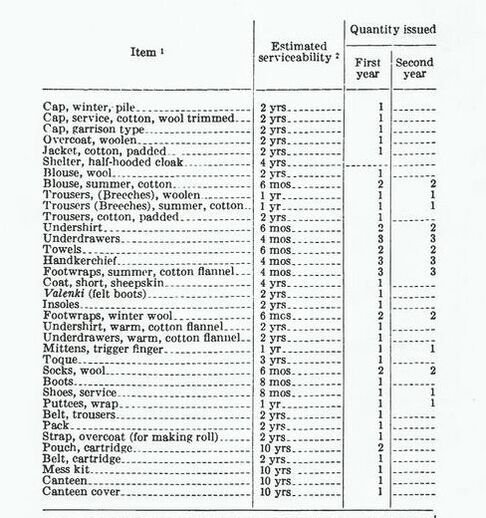
Left: Is a list of basic personal issue uniform and equipment to the RKKA during the war, which details the quantity issued and each items estimated serviceability.
Due to the evacuation of manufacturing facilities ahead of the German advances into the western USSR and battlefield losses of matériel during the early years of the war, not all the listed items would have been available for issue and soldiers often had to make do with whatever was provided!
Certainly, from mid 1944 onwards the situation had vastly improved and front line units were generally better equipped than their mid war counterparts. For example, 60% of all winter clothing issued in the winter of 1944-45 was new, the remainder was renovated re-issue.
Even down to small items, such as the reintroduction of basic sewing kits had been completed for all troops in January 1945!
All summer clothing and boots were withdrawn during the winter months and were renovated and serviceable items were re- issued the following spring season. Likewise, winter issue clothing etc would have been renovated during the summer months for potential re-issue.
The above list was part of a comprehensive research document prepared by the US Army intelligence services published in March 1946.
Due to the evacuation of manufacturing facilities ahead of the German advances into the western USSR and battlefield losses of matériel during the early years of the war, not all the listed items would have been available for issue and soldiers often had to make do with whatever was provided!
Certainly, from mid 1944 onwards the situation had vastly improved and front line units were generally better equipped than their mid war counterparts. For example, 60% of all winter clothing issued in the winter of 1944-45 was new, the remainder was renovated re-issue.
Even down to small items, such as the reintroduction of basic sewing kits had been completed for all troops in January 1945!
All summer clothing and boots were withdrawn during the winter months and were renovated and serviceable items were re- issued the following spring season. Likewise, winter issue clothing etc would have been renovated during the summer months for potential re-issue.
The above list was part of a comprehensive research document prepared by the US Army intelligence services published in March 1946.